Human Design Will Center in Business
The Human Design Will Center in Business (Also Called the Heart Center or Ego Center)
What is the Will Center in Human Design?
The Will Center governs willpower, commitment, and self-worth, and only about 35% of people have it defined. Also called the Heart Center or the Ego Center, it’s one of four motor centers in the Human Design bodygraph: the parts of your design built to generate steady, driving energy rather than just ideas. In business, it’s the center behind whether a goal you set gets followed through, and whether your sense of worth gets tangled up with how much you produce. Defined or open, this center was never about how hard you work. It’s about what your body was built to commit to, and what was never yours to prove.
You made the plan. The revenue goal, the launch date, the content calendar you were finally going to stick to this time. Three weeks in, it’s a tab you keep meaning to close, and you’re back to wondering what’s wrong with your discipline.
Or maybe it’s the opposite problem. You said yes to the client, the collab, the project, before you’d even finished reading the email. You committed hard, worked yourself into the ground to prove you were worth the yes, and by the end you couldn’t stand to look at it anymore.
That’s not a discipline problem. It’s not a follow-through problem either. That’s your Will Center, doing exactly what it was designed to do.
What The Will Center Actually Is
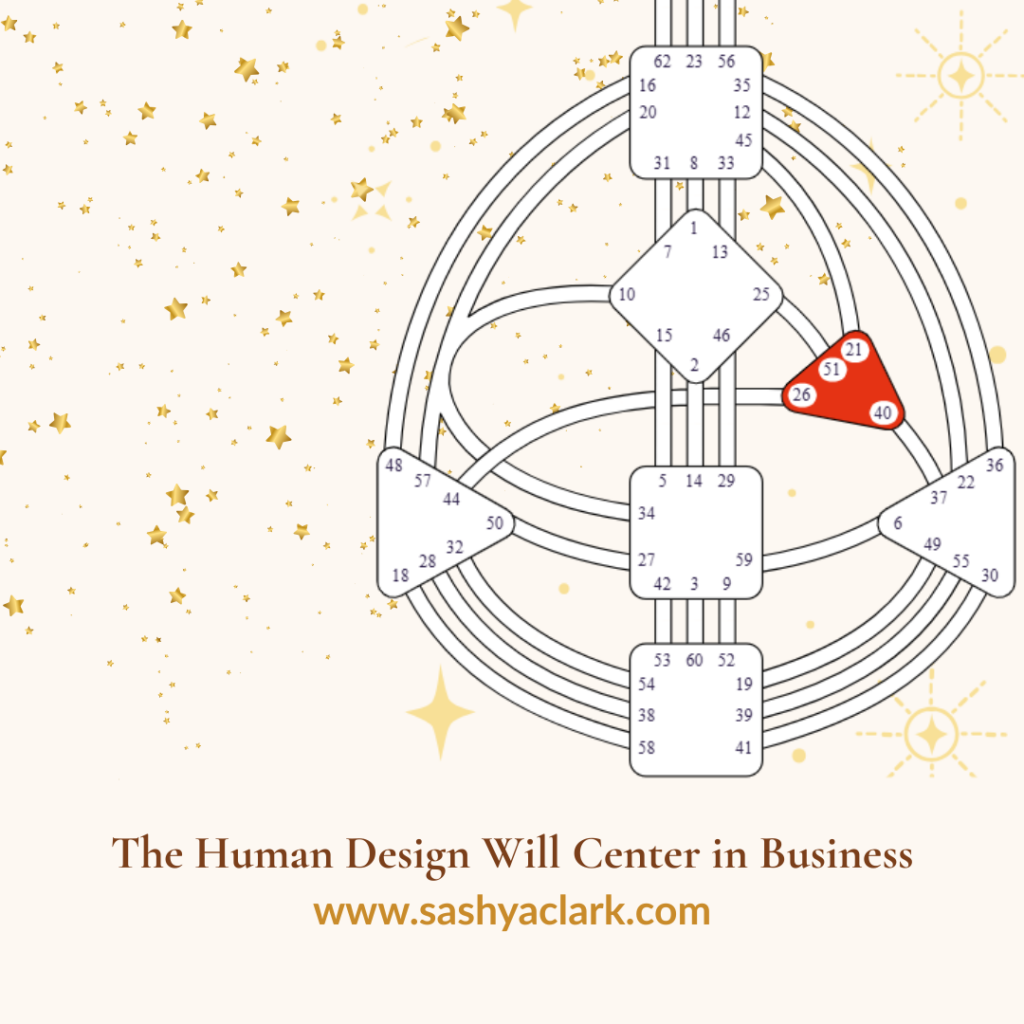
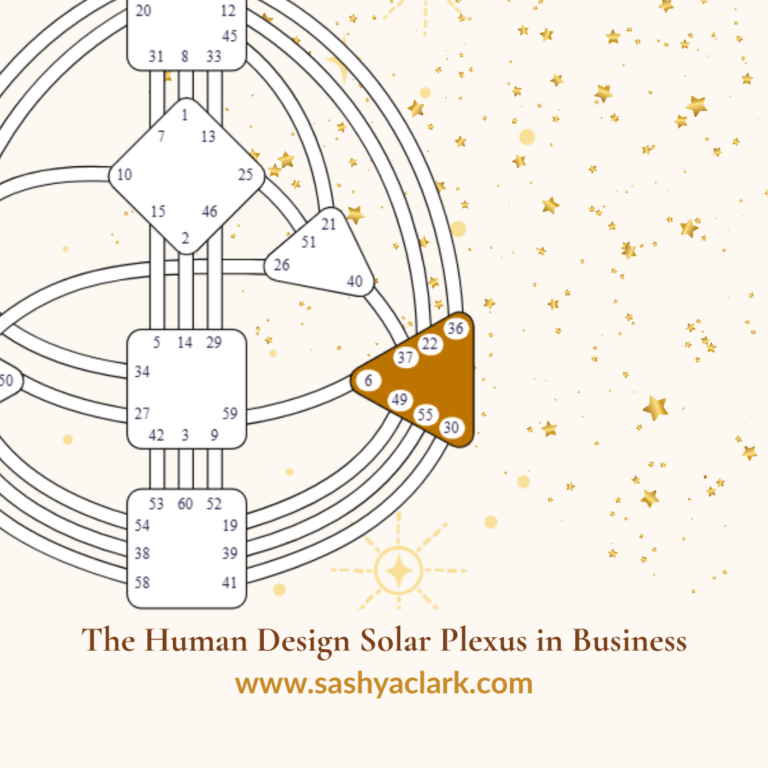
Your Will Center sits in the small triangle in the middle right of your Human Design bodygraph, between the Throat Center and the Solar Plexus. Some people call it the Heart Center. Some call it the Ego Center. All three names are pointing at the same real estate: willpower, commitment, motivation, and self-worth.
It’s one of four motor centers: the parts of your design built to generate consistent, driving energy your body can act on. That distinction matters here.
An idea is inspiration. A motor is follow-through: the real capacity to commit to something and carry it to the end.
It doesn’t hand you direction. That’s your G Center’s job. It doesn’t hand you a sense of who you are, either. I have noticed some people on the internet calling it the “Self-Esteem” Center, and I think this is a flat reading of the energy of this center. The best way to improve your self-esteem is to do esteemable things: making choices that align with your values. Integrity is the dominant theme of this center.
It only asks one question, over and over: is this worth committing my energy to.
I have an Open Will Center, not just undefined. In my chart it is fully open, no gates hanging there at all. For the first third of my life, I spent an enormous amount of energy trying to prove myself: in my career, in my relationships, in my family.
I didn’t have language for it yet. I just knew I was tired in a very specific way that rest didn’t fix.
The clarity came slowly, not all at once. But somewhere in my 20s I started to learn that if I was pleasing G0d, as I understand G0d, I don’t have to prove anything to anyone else. I especially don’t have to prove I love someone by “turning myself into a pretzel” or becoming someone else to make them happy.
Whichever configuration you have, think of this center like the kind of disposable battery you have in your car. Yes, it recharges a few times, but over time it cannot get back to full capacity no matter how good your alternator is. You can use it brilliantly, or drain it on something that was never yours to power. Or waste it just trying to get your way all the time.
Either way, it doesn’t recharge on command.
Defined, Undefined, and Open
If your Will Center is defined, you carry a rare gift. Only about 35% of people have this center defined at all: an actual motor for willpower, running consistently. When you commit to something by saying yes, your whole life backs it up.
The shadow is the exact same mechanism. That motor doesn’t know the difference between a project you love and one you agreed to out of guilt. It commits either way, and it follows through either way, which means the only real safeguard is walking in integrity and making sure your yes is really a yes, and your no is really a no.
I have a friend with a defined Will Center who isn’t a Manifestor: her design doesn’t connect that motor straight to her throat. What she’s noticed is that a defined Will Center can almost fake its way into acting like a Sacral response, saying yes, committing, delivering.
But when it finally runs out, and it does run out, the cost shows up in her body and she needs an extended period of rest after.
In business, this looks like setting a revenue number or a launch date and hitting it through sheer will. I call those “manufactured timelines.” Unless the Universe brought you a timeline or a goal, you can mislead yourself by committing to one. Oh sure, you are allowed to use that motor that way, but it will lead to burn out, guaranteed.
If you’ve ever poured out your love and passion into a project, only to finish and almost disgusted by it, unable to picture going back, that’s what a spent Will Center feels like.
If your Will Center is undefined but not fully open, meaning one gate is there without a complete channel connecting it to anything else, the energy runs differently. That single gate filters everything this center touches through its own specific frequency: consistent in one narrow way, inconsistent everywhere else the center gets activated by other people.
The gift here is wisdom through observation. You watch how willpower and commitment work in the people around you, up close, in a way someone with the whole center defined never has to.
The real challenge is that your own inconsistency gets mistaken, by you most of all, for unreliability. It isn’t. People with undefined or open Will Centers make commitments, too, but from different places and with different ways of knowing what is correct for them.
If your Will Center is fully open like mine, no gates defined anywhere, you’re a pure receiver and amplifier for willpower and worth. That’s not a lesser configuration. You will have a built in B.S. detector as well. I can feel when something is important, vs when something is important to someone because they don’t want to look bad.
What I’ve come to understand, slowly, is that the wisdom isn’t about pushing harder. It’s about right sizing.
The soul curriclumn hidden in the gates of the Will Center is humility. Humility doesn’t mean thinking only of others. That’s still a form of pride, just dressed differently.
Real humility means I’m on my own list. If I care about five people, I make sure I’m one of the five: my needs and wants aren’t more important than anyone else’s, and they aren’t less important either.
And about getting your way: in our home it works best if we plan to give each other turns getting their way. Even when we go on vacation, we take turns deciding what we will do together. That is a healthy expression of the Will.
Another healthy expression is to be in the habit of running all your decisions back to Source and then wait for your Strategy and Authority before acting. Once you are clear that your will and the Will of the Universe are aligned, you can commit and this is the proper use of the Will.
You get to stop performing a consistency you were never built to sustain, and start asking a completely different question: is this mine to prove?
What The Heart Center Tells You About Your Business
When your Will Center gets in the middle of your business decision, it shows up as a problem long before you’d think to call it an energy problem.
Generic business advice tells everyone to set a goal and push through resistance. That advice was built for one specific motor, running in about a third of the population, and applying it to a chart it wasn’t built for leaves a residue.
I’ve watched too many talented women spend a year cleaning up that residue.
I use one diagnostic question here: is this yours to do, or did you commit yourself to somebody else’s manufactured timeline. If you’re not sure, pause and take a real break from it. Let it rest.
If it’s yours, it comes back to you, every time, through your own Strategy and Authority.
Your Will Center is one piece of a much bigger map, and it’s not the piece that tells you what to do next. It’s the piece that tells you what you can sustainably commit to once you know the rest. That fuller picture, your whole chart working together, is what a Business by Design Strategy Session gives you.
Human Design Is a Synthesis
I’ll say this in every one of these posts, because it’s true every time. Human Design isn’t one system. It’s a layered synthesis of four ancient traditions woven together: Jewish Kabbalah, the Chinese I Ching, the Buddhist chakra system, and astrology.
I won’t do a Human Design reading without the astrology piece. One-size-fits-all Human Design advice, the kind that tells everyone with your configuration to do the exact same thing, is reading one layer of a multidimensional document and calling it the whole story.
Your chart isn’t a label. It’s a living map, and this Will Center piece is just one region of it.
The Leadership Thread
There’s a Leadership Skill tied to this center, and it’s called Exerting Pressure. If you’ve ever watched what happens when someone finally commits, fully, to something that’s theirs, you already know this skill. You just didn’t have the name for it yet.
Exerting Pressure isn’t about forcing anyone into anything. It’s the capacity to hold a commitment steady, in yourself or for the people around you, long enough for something real to happen. Your Will Center, defined or open, is where you practice that on yourself first, whether you realize it or not.
So you say you’re not a leader. You sure about that?
The Gates of the Will Center
Four gates make up the Will Center, and each one carries its own particular flavor of willpower.
Gate 21: The Hunter/Huntress wants the final say, and it isn’t being difficult about it. This gate needs to control its own domain, its own resources, its own decisions, and when someone else’s hands are on the wheel, it cannot settle. Read the full Gate 21 post here.
Gate 26: The Egoist is built to persuade, and built to be seen as excellent while doing it. The shadow is performing worth instead of trusting it. The gift, once the work is done, is real influence that doesn’t need an audience to feel true. Read the full Gate 26 post here.
Gate 40: The Gate of Aloneness carries a real paradox: a deep drive to serve, paired with an equally real need to disappear and recover afterward. Skip the second half, and the first half burns out fast. Read the full Gate 40 post here.
Gate 51: The Gate of Shock lives for the shake-up. It’s the gate that thrives on sudden expansion, competition, the jolt that wakes everyone else up. Left unchecked, it can go looking for chaos just to feel something. Read the full Gate 51 post here.
Each of these gates has its own full post in the Gates Library, with the Human Design, Gene Keys, I Ching, Kabbalah, and astrology layers explored in depth. Come back and wander whenever you’re ready.
Where to Go From Here
If you’re not sure yet whether your Will Center is defined, undefined, or wide open like mine, start with your chart. Three Keys to Building a Business That Feels Like You is free, and it walks you through the foundational pieces of your Human Design and astrology chart so you can see what you’re working with.
If you already know something’s off between how hard you’re working and how little it’s landing, the Authentic Vibe Check is $111 and gets specific fast: a real look at your actual brand, not another quiz.
And if you’re ready for the whole map, not just this one center, the Business by Design Strategy Session is $497. It’s not a reading. It’s a business strategy session built entirely from your chart: what you’re here to commit to, and what was never yours to prove in the first place.
No rush. Just pick what feels like a yes.
(((HUGS))) — Sashya
Frequently Asked Questions for the Heart Center
What is the Will Center in Human Design?
The Will Center governs willpower, commitment, motivation, and self-worth, and it’s one of the smallest centers in the bodygraph. It’s also called the Heart Center or the Ego Center, and it’s one of four motor centers: the parts of the chart built to generate consistent, driving energy rather than ideas alone. Only about 35% of people have it defined. For business owners, this is the center behind whether a goal gets followed through, and whether self-worth gets tied to output. It’s not a measure of character. It’s a measure of design.
Where is the Will Center located in the bodygraph?
The Will Center sits in the small square near the center of the Human Design bodygraph, directly below the throat and to the right of the G Center. It connects to the throat, the spleen, the solar plexus, and the G Center through four possible channels, though many people have it defined without any of those channels complete. Its small size in the chart doesn’t match its impact: as a motor center, it plays an outsized role in whether commitments, once made, get carried through.
Is it better to have a defined or undefined Will Center in business?
A defined Will Center gives you steady, built-in follow-through, while an undefined or open Will Center gives you flexibility and wisdom through observation. Neither is better for business. A defined Will Center risks over-committing and eventually burning that motor out. An undefined or wide open Will Center risks measuring your own worth against a consistency you were never built to sustain. Business strategy should be built around which configuration you actually have, not around generic advice written for the other one.
How does the Will Center show up in business or entrepreneurship?
For a defined Will Center, business often looks like setting an ambitious goal and hitting it through sustained willpower, with the real risk being over-commitment that eventually burns the motor out. For an undefined or open Will Center, it more often looks like New Year’s resolutions and manufactured deadlines that fall apart by February, followed by a private conclusion that something is wrong with your discipline. About 65% of people fall into this second group. The fix isn’t more discipline. It’s building goals around your actual design instead of a generic timeline.
What gates make up the Will Center?
Four gates live in the Will Center: Gate 21 (The Hunter/Huntress), Gate 26 (The Egoist), Gate 40 (The Gate of Aloneness), and Gate 51 (The Gate of Shock). Each carries a different flavor of willpower, from the need for control and the final say, to the drive to persuade, to the paradox of service paired with a need for solitude, to a thriving on sudden change. Every gate has its own full post in the Gates Library covering the Human Design, Gene Keys, I Ching, Kabbalah, and astrology layers in depth.